
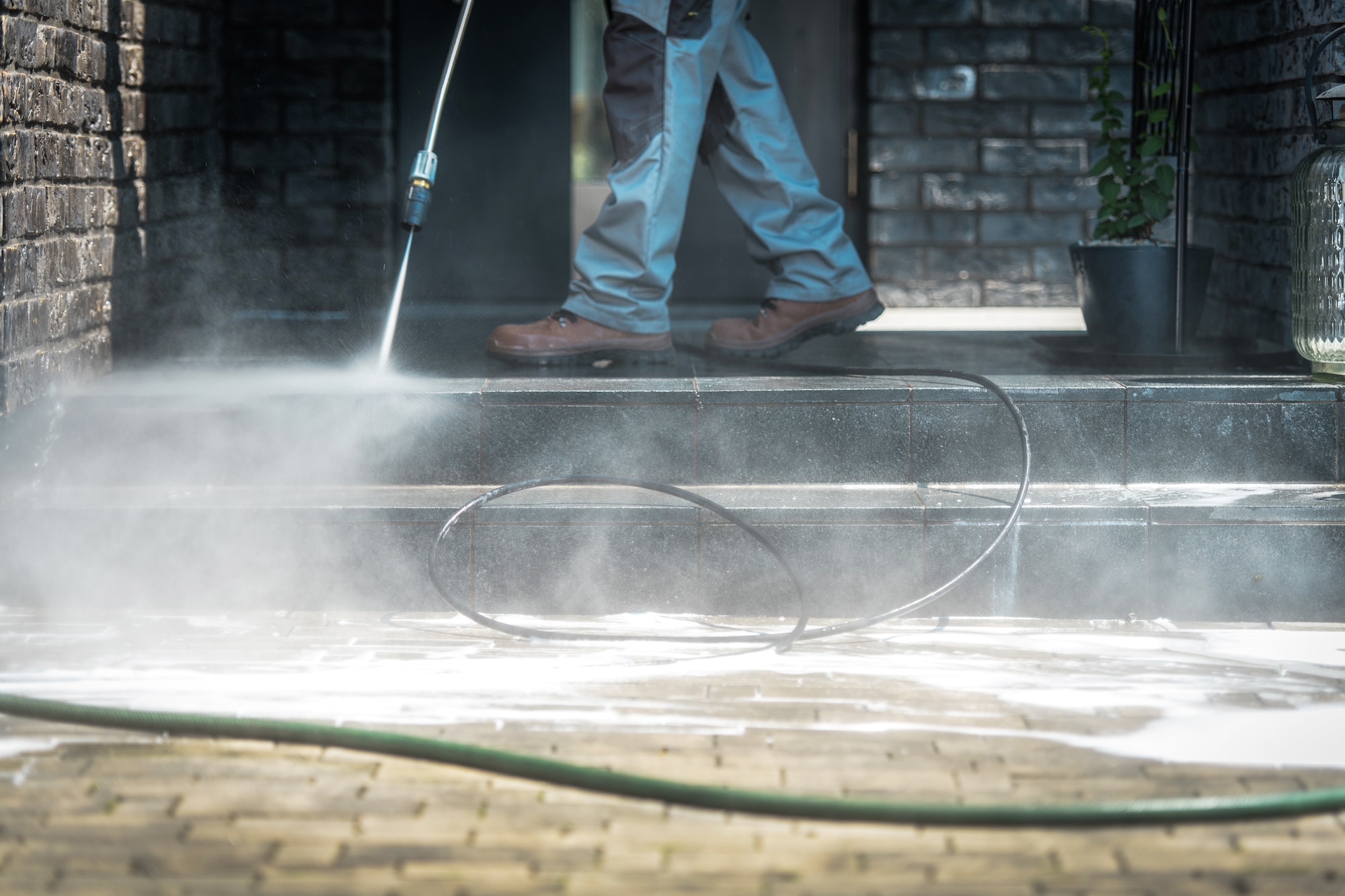
Take a look at the concrete outside your front door. Is it still the colour it was when the house was new, or has it slowly turned grey? Perhaps the patio has a few dark patches that never seem to disappear, even after rain. You might also notice green marks appearing along a fence or on the shaded side of the house.
These changes rarely happen overnight. They build up gradually, which is why many homeowners do not notice them until the outside of the property starts looking tired.
Gold Coast weather has a part to play. Humidity, rainfall, coastal air, garden debris and long periods of moisture all affect outdoor surfaces. A property close to the beach can develop a different type of buildup from a house surrounded by trees further inland.
So, how often should you pressure clean a house?
There is no calendar date that works for every property. Some areas, such as driveways and pool surrounds, may need cleaning several times a year. Exterior walls might only need a proper wash every year or two. The condition of the surface matters more than following a fixed schedule.
The following guide explains what homeowners should look for, how often different areas may need attention and when high-pressure equipment is not the right choice.
Start With the Areas That Get Dirty First
If you walk around a house after a few weeks of wet weather, the first signs of buildup are often easy to spot.
The driveway may have dark tyre marks. The concrete beside the garden might look green. Water could be sitting in a corner of the patio, leaving a slippery film behind.
These areas deserve attention before the rest of the property.
A driveway gets used every day. Vehicles bring in dust, mud and road residue, while oil drips and tyre marks can become more noticeable over time. Patios and outdoor entertaining areas collect food spills, fallen leaves and dirt from foot traffic.
Walls are different. They are not exposed to the same level of daily contact, so they generally do not need washing as frequently. A wall under a tree, however, may collect more organic material than one that receives plenty of sunlight.
When deciding whether to pressure clean, look at the amount of buildup and the type of material underneath it. A few marks on concrete are not the same problem as algae spreading across a painted wall.
How Often Should Each Part of Your Property Be Cleaned?
A useful maintenance plan separates the property into individual areas. That way, you can deal with the surfaces that need attention without paying to wash everything unnecessarily.
Driveways and Concrete Paths
Suggested interval: Every 6–12 months, depending on use and exposure.
Driveways are usually among the first places to show dirt. Cars leave tyre marks, garden soil gets carried across the surface and rain can move debris into corners.
A driveway with good drainage and plenty of sunlight may stay presentable for longer. The shaded side of a property can be a different story. When water remains on concrete, dark staining and green growth may become more noticeable.
For many homes, checking the driveway every six months is sensible. If it still looks clean and there is no slippery buildup, another full wash may not be necessary.
When you do pressure clean concrete, the aim should be an even result. Holding a narrow nozzle too close to the surface can create lines or uneven patches. Older concrete, painted concrete and decorative finishes may need a different technique.
Exterior Walls and House Cladding
Suggested interval: Every 12–24 months, or when visible buildup appears.
Walls do not all weather in the same way.
A section facing the afternoon sun may collect dust but dry quickly after rain. A wall behind shrubs can remain damp for much longer. You may notice green marks near the bottom of the wall, particularly where garden sprinklers regularly spray water.
A gentle exterior wash can help remove surface dirt before it becomes established. However, painted walls, render, weatherboards and older brickwork should not automatically be treated with strong water pressure.
Soft washing or another suitable low-pressure method may be more appropriate. The condition of the paint, joints and surface finish should be checked first.
Patios and Alfresco Areas
Suggested interval: Every 6–12 months.
Outdoor living spaces get plenty of use on the Gold Coast. Families eat outside, children play on the patio and furniture is moved around throughout the year.
The result is a mixture of food marks, dust, leaf stains and general foot traffic. Covered patios can also collect cobwebs and fine dust because rainfall does not reach every corner.
If you regularly entertain guests, you may prefer to have the area cleaned before the warmer months or a planned gathering. Otherwise, inspect it every few months and arrange a deeper wash when the surface needs it.
Be careful with natural stone, decorative tiles and sealed paving. A cleaning method that works on ordinary concrete may be too aggressive for these materials.
Pool Surrounds
Suggested interval: Every 3–6 months, subject to the surface and how often the pool is used.
Pool areas need a little more attention than many other parts of the home.
Water, sunscreen, fallen leaves and damp conditions can leave residue around the pool. Shaded paving may develop algae, making the surface unpleasant and potentially slippery underfoot.
Do not wait until the entire pool area changes colour. Check the edges, steps and sections that remain wet after swimming.
The paving material determines how it should be cleaned. Some surfaces have coatings or textured finishes that can be affected by excessive pressure. The cleaning method should also be suitable for the pool environment.
Roofs and Gutters
Suggested approach: Inspect at least once a year; arrange cleaning when the condition calls for it.
Roofs are often forgotten until stains become visible from the street.
Leaves, branches, lichen and other organic material can collect in areas where water does not drain freely. Properties surrounded by trees may need more frequent inspections than homes with clear rooflines.
A roof should not be treated like a concrete driveway. Using a pressure washer at close range can damage certain roofing materials, loosen protective coatings or force water beneath tiles.
Never climb onto a roof to inspect or clean it without the appropriate safety measures. If you notice significant growth or debris, arrange a suitable assessment. Depending on the roofing material, a controlled low-pressure treatment may be the safer option.
Fences and Retaining Walls
Suggested interval: Every 12–18 months, with earlier attention in damp or shaded locations.
Fences and retaining walls can gradually collect dirt without anyone noticing. Timber may become weathered, while concrete and masonry can develop dark marks where moisture remains.
Check the areas closest to garden beds, downpipes and irrigation systems. These are often the spots where water and soil leave visible stains.
The material matters here too. Timber, painted metal and rendered masonry should not all be cleaned with the same pressure setting.
A Practical Exterior Cleaning Schedule
The table below gives a starting point for planning maintenance. These are general intervals, not compulsory appointments. If a surface remains in good condition, there is no reason to clean it simply because six or twelve months have passed.
| Area of the home | General cleaning interval | What to look for | Cleaning considerations |
|---|---|---|---|
| Driveway | 6–12 months | Tyre marks, oil stains, dark patches | Check concrete condition and use even pressure |
| Concrete paths | 6–12 months | Dirt, algae and slippery sections | Pay attention to shaded areas |
| Exterior walls | 12–24 months | Dust, green marks and water stains | Soft washing may suit painted surfaces |
| Patio and alfresco | 6–12 months | Food marks, leaf stains and grime | Match the method to paving material |
| Pool surrounds | 3–6 months | Slippery residue and algae | Use a surface-appropriate cleaning process |
| Roof | Annual inspection | Lichen, debris and staining | Avoid direct high-pressure washing unless suitable |
| Fences and retaining walls | 12–18 months | Weathering, dirt and organic growth | Timber and painted finishes need extra care |
A homeowner with a shaded concrete driveway might need more regular attention than someone with an open, sunny driveway. Use the table as a guide, then adjust it to suit the actual condition of your property.
What Changes the Cleaning Schedule on the Gold Coast?
Two houses in the same suburb can have completely different cleaning requirements. The surrounding environment often explains why.
Coastal exposure is one example. Homes close to the ocean can collect salt residue on exposed fixtures and surfaces. Regular visual checks are worthwhile, particularly after extended periods of coastal weather.
Trees and garden placement also make a difference. Branches that hang over a roof can drop leaves and organic debris. Dense plants beside a wall may reduce airflow and keep the surface damp.
Drainage is another factor. If water repeatedly pools in one part of the driveway, cleaning alone will not fix the underlying issue. The drainage problem may need attention first.
Household activity should not be overlooked either. A property with several vehicles, pets and regular outdoor entertaining will naturally collect more dirt than a home with limited outdoor use.
When planning to pressure clean a property, consider these conditions rather than copying the schedule used by a neighbour.
When Is High Pressure Cleaning the Wrong Choice?
More pressure does not always mean a better clean.
A pressure washer can be useful for suitable hard surfaces, but the same equipment can cause damage when used incorrectly. Water forced into cracks or behind paint can create problems that were not there before the cleaning began.
For example, an older painted wall may lose sections of its finish. Timber can become rough or splintered. Loose mortar and damaged pointing may deteriorate further when exposed to a strong water jet.
This is why a surface assessment should happen before equipment is switched on.
Concrete and some paved surfaces may be suitable for high pressure cleaning. Delicate coatings, older brickwork, timber, roof materials and painted cladding may need soft washing or hand cleaning instead.
If you want to understand the available methods, see the High Pressure Cleaning service. The important thing is to select a treatment that suits the surface, not simply use the strongest setting available.
Small Maintenance Jobs That Can Delay a Full Wash
A professional exterior clean is not the only way to keep a property looking presentable. A few simple habits can reduce the amount of dirt that accumulates between appointments.
For example, leaves left in a corner of the patio can hold moisture against the paving. Over time, that patch may become darker than the surrounding area. Removing the debris early can help prevent the buildup from spreading.
The following small jobs are worth including in your regular home maintenance:
- Sweep loose leaves, soil and debris away from driveways and paths.
- Trim branches and shrubs that touch exterior walls or roof sections.
- Check garden sprinklers so they are not constantly wetting walls and paving.
- Clear accessible drainage grates and remove loose debris around them.
- Look for areas where water regularly pools after rainfall.
- Rinse away fresh surface dirt where it is safe and appropriate to do so.
These jobs will not replace every professional cleaning treatment. They can, however, help you identify problems earlier and avoid leaving dirt to accumulate for months.
Why Wastewater Management Matters During Exterior Cleaning
There is another part of exterior cleaning that homeowners should ask about: where does the dirty water go?
When a driveway or exterior wall is washed, the runoff may contain soil, sediment, algae and cleaning residue. If that water flows straight into a roadside gutter, it can reach local waterways.
Queensland’s environmental guidance explains that stormwater can flow untreated into creeks and rivers. Local council guidance also warns that wastewater from pressure cleaning must not be allowed to enter roadside gutters and stormwater systems.
The Queensland Government’s information on caring for water is a useful reference for understanding why pollutants should be kept out of stormwater drains.
This is particularly relevant for properties with sloping driveways, nearby drains or outdoor areas that drain towards the street. A responsible cleaning plan should consider runoff before the work begins, rather than treating it as an afterthought.
Should You Do It Yourself or Arrange Professional Cleaning?
That depends on the size of the job and your confidence with the equipment.
A small concrete section may be manageable for someone who understands how to operate a pressure washer safely. A whole exterior, a large driveway or a surface with established staining is a different job.
The common mistake with DIY cleaning is starting with too much pressure. It may seem like the fastest way to remove a stubborn mark, but it can leave stripes, damage a coating or push water into places where it should not go.
There is also the issue of access. Roofs, upper walls and awkward corners are not suitable places for an inexperienced person to experiment with equipment.
For a larger job, professional assessment can help determine which areas need high pressure, which need a gentler treatment and which should be left alone.
The goal is a clean property without unnecessary wear to the surfaces being treated.
Conclusion
A Gold Coast home does not need every exterior surface washed on the same schedule. The driveway may need attention twice a year, while the walls can remain in good condition for much longer. Pool surrounds, shaded patios and coastal-facing areas deserve closer inspection because moisture and residue can build up more quickly.
Walk around your property every few months. Look at the concrete, check the shaded sections and pay attention to areas where water tends to sit. If a surface needs cleaning, make sure the method is suitable for its material and that wastewater is managed responsibly.
If you would like advice on the right cleaning approach for your property, Fresh Exterior Cleaning can help assess the surfaces and discuss a suitable maintenance plan. Explore the High Pressure Cleaning service or contact the team for a quote. You can also visit the official website to learn more about the available exterior cleaning services.
Frequently Asked Questions
1. How often should I pressure clean my house on the Gold Coast?
It depends on the surfaces and the property’s surroundings. Driveways and pool surrounds may need cleaning every 6–12 months or sooner, while exterior walls may only need a thorough wash every 12–24 months. Coastal exposure, shade and moisture can shorten these intervals.
2. Can I pressure clean my house walls every year?
Not every wall needs annual pressure cleaning. Painted walls, render and weatherboards may be better suited to soft washing or another gentle method. Check the condition of the finish before choosing a cleaning technique.
3. What is the best time of year for exterior cleaning on the Gold Coast?
There is no single best month. Many homeowners arrange cleaning when outdoor surfaces begin showing noticeable buildup or before planned maintenance. Choose suitable weather conditions and allow surfaces enough time to dry.
4. Can pressure cleaning remove mould and algae from concrete?
It can remove surface growth from suitable concrete, although the result depends on how established the growth is and the condition of the surface. Areas that stay damp may develop new growth if the underlying moisture or drainage issue remains.
5. Is professional high pressure cleaning better than DIY cleaning?
Professional cleaning can be helpful for large areas, stubborn buildup and surfaces that need careful treatment. A trained cleaner can assess the material, choose suitable equipment and consider wastewater management. For small, straightforward jobs, DIY cleaning may be suitable if the equipment is used correctly.